
What does it take to be saved?
Belief in the resurrection of Jesus and that Jesus is Lord.
There are other faiths where resurrection has been claimed, but all of them have credible naturalistic explanations.
Still to this day, there is no credible naturalistic explanation for the resurrection of Jesus!
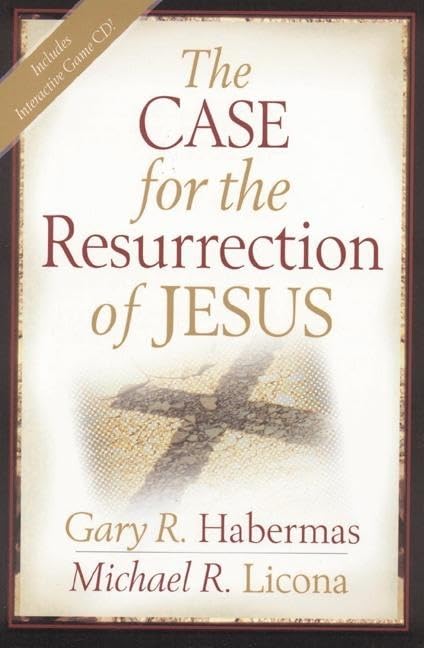
Read or listen to ‘The Case for the Resurrection of Jesus’, click here: https://www.amazon.co.uk/dp/0825427886
A simple book with a powerful message!
It doesn’t include the evidence from the Shroud of Turin, which is itself a mysterious artefact that increasingly points to it being authentic, as more scientific analysis is carried out, click here. Instead, this book sticks to the historical evidence and arguments, which are themselves powerful.
Here is a potted summary written by a commenter on Amazon:
If you are looking for a laymen’s guide on the arguments for the resurrection of Jesus, from every conceivable angle, then this book is for you. Habermas and Licona are two Bible scholars that have joined forces to provide both new and mature believers with everything they need to know to share their faith and knowledge on the resurrection of Jesus.
One of the great strengths of the book is that right from the start Habermas and Licona give us what they believe is a very powerful strategy for sharing the story of the resurrection, which they call a “minimal facts approach.” The great advantage of this approach is that we can stick to the topic of the resurrection and not get sidetracked into issues on the reliability of the Bible. In addition this approach considers only those data that are so strongly attested historically that almost every scholar (including the skeptical ones) accept their truthfulness.
Under this approach the authors suggest that the first four facts below are almost universally accepted by all types of scholars, while the fifth fact is accepted by a majority of scholars:
1. Jesus died by crucifixion.
2. Jesus’ disciples believed that he rose and appeared to them.
3. The church persecutor Paul was suddenly changed into a believer.
4. The skeptic James, brother of Jesus, was suddenly changed into a believer.
5. The tomb was empty.
The book also discusses the many different theories that skeptics have used down through the centuries to debunk the resurrection of Jesus. Some of the most popular theories include: the resurrection being a legend, the disciples stole the body, the witnesses went to the wrong tomb, the apparent death theory and the hallucination hypotheses. One by one Habermas and Licona give detailed reasons why each theory fails to align with the five minimal facts shared above. Throughout the book the authors appeal to both biblical and extra-biblical sources to make their case.
I especially enjoyed reading Chapter 8 – Naturally Speaking. In this chapter science, miracles and near-death experiences are discussed and the reader comes away with the realisation that God does indeed exist.
Throughout the book a myriad of charts help to summarise each different idea and theory making it easy to remember the main arguments used to equip the believer with everything they need to make the case for the resurrection of Jesus.
I also found the chapter on People Skills especially practical in helping to prepare us with the wisdom we need to share everything we have learned in the book with skeptics and non-believers.
The appendix provides a very detailed outline of all the arguments and is the perfect refresher course for the book. The many pages of notes are an excellent source for anyone desiring to go deeper into the material. Finally the interactive game CD is a great way to reinforce many of the ideas from the book and is a fun way to help remember important themes.